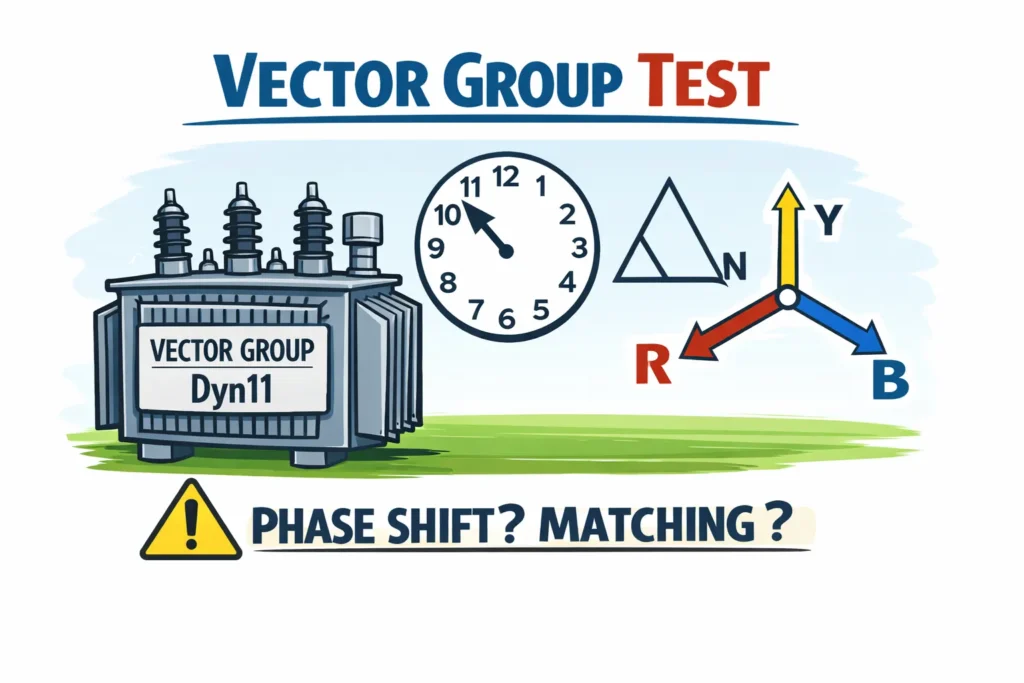
The vector group test of the power transformer verifies the winding configuration and the phase displacement between the HV and LV windings of a three-phase transformer. This test is done to confirm the transformer matches with the name plate vector group. The vector group test is essential commissioning test and must be confirmed for parallel operation of transformers as the vector group test ensures that the phase relation and polarity of the transformers are identical.
If different vector groups of transformers are connected in parallel, potential difference will exist in their secondaries which will cause large circulating current between both transformers even at no load conditions. Therefore, a vector group test is essential before parallel operations.
Table of Contents
Equipment needed for Vector Group Test
The equipment required for the vector group test are three phase AC source, digital voltmeters to measure voltages, connection cables and test leads.
However, modern transformer turns ratio tester can also be used as it has the ability to measure the phase shifts automatically and display the vector group results.
Test procedure
Step 1: Disconnect and discharge the transformer so that it gets isolated from the grid.
Step 2: Disconnect all the HV and LV terminals.
Step 3: Connect the 3-phase AC Supply to the HV side of the transformer and short 1U and 2u that means R phase of HV and LV windings. This shorting creates a common reference point for the voltage measurement. For star connected windings, the neutral point is kept floating because grounding it can introduce artificial reference to earth.
Step 4: Apply 3 phase AC supply to HV winding and upon the application, the LV winding will develop proportional voltage based on the turns ratio.
Step 5: Measure the voltages at the specified test points for each vector group with the voltmeter and record the readings.
Step 6: Compare the measured voltages against theoretical test conditions for vector groups. For a vector group to be confirmed, three conditions or equations must be satisfied.
Voltage measurement and equations for various vector group tests
YNyn0
The HV winding is star or wye connected with the neutral brought out, the LV winding is star or wye connected with the neutral brought out and there is no phase difference between HV and LV, denoted by 0.
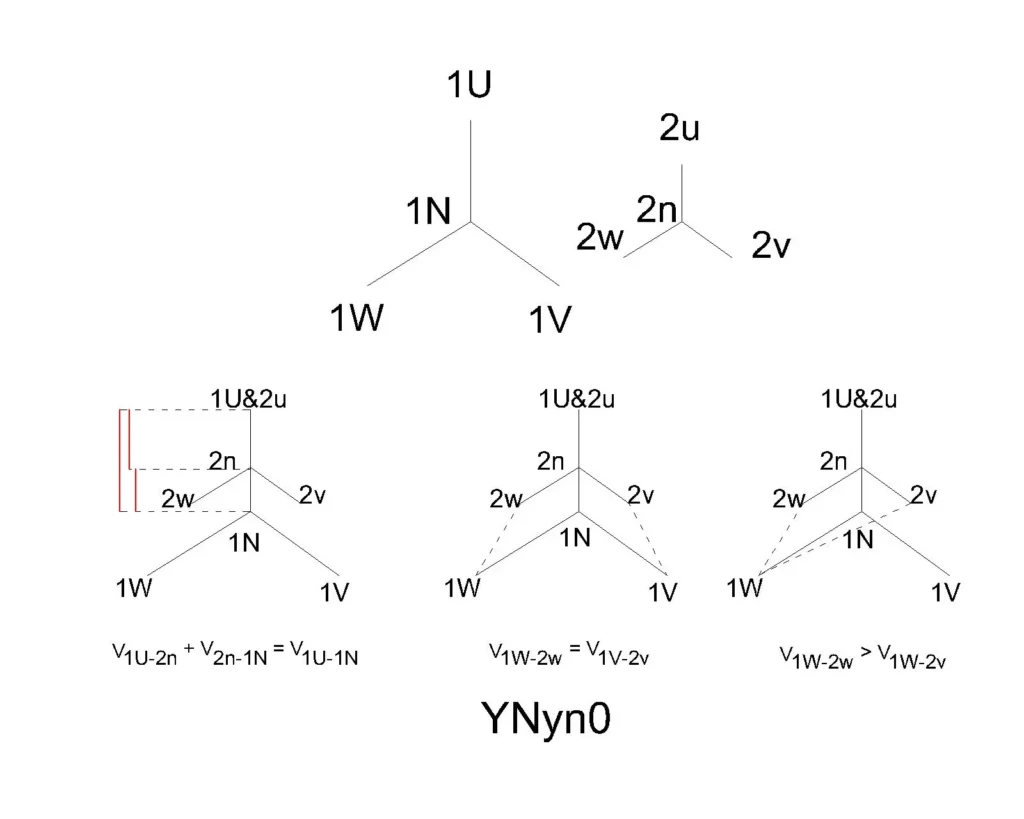
Measure the voltages between
1U-2n, 2n-1N, 1U-1N and verify the equation V1U-2n + V2n-1N = V1U-1N….[1]
1W-2w, 1V-2v and verify V1W-2w = V1V-2v….[2]
1W-2w and 1W-2v and verify V1W-2w > V1W-2v…..[3]
YNyn6
The HV winding is star or wye connected with the neutral brought out, the LV winding is star or wye connected with the neutral brought out and the LV leads the HV by 180 degrees as denoted by 6.
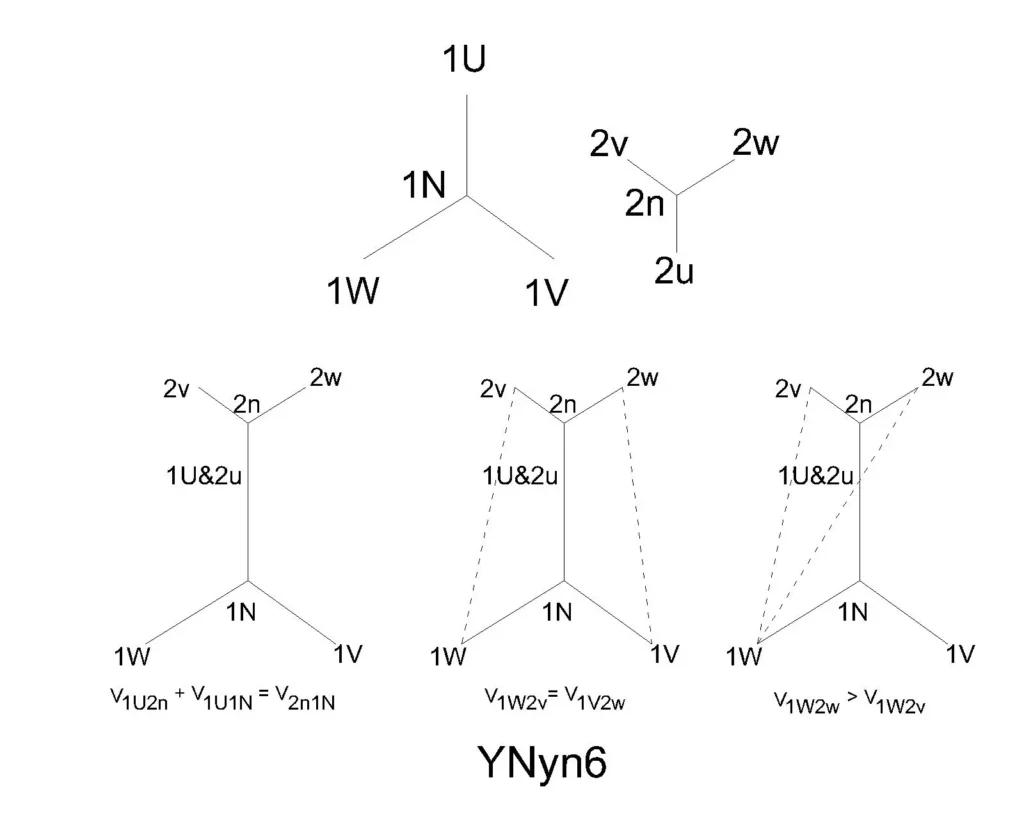
Measure the voltages and verify the equations
V1U2n + V1U1N = V2n1N…..[1]
V1W2v = V1V2w……[2]
V1W2w > V1W2v…..[3]
Dd0
The HV winding is delta connected, the LV winding is delta connected and there is no phase difference between the HV and the LV, denoted by 0.
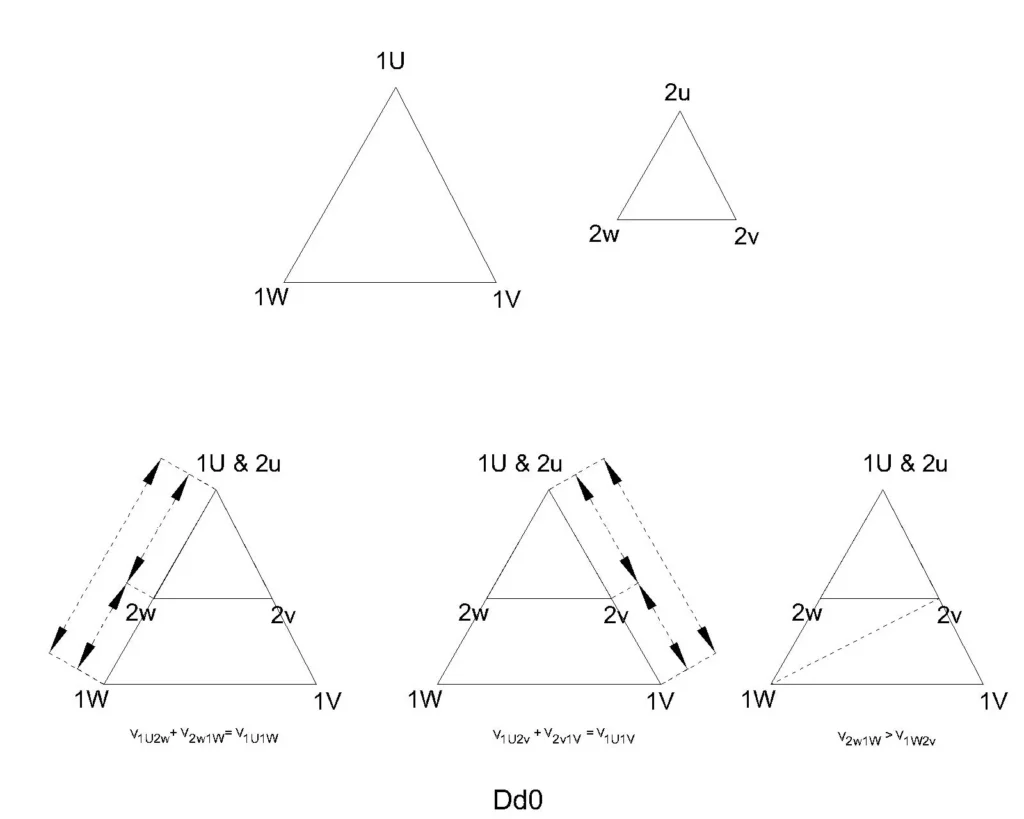
For Dd0 vector group test, measure and verify the following equations
V1U2w + V2w1W = V1U1W….[1]
V1U2v + V2v1V = V1U1V….[2]
V2w1W > V1W2v….[3]
Dd6
The HV winding is delta connected, the LV winding is delta connected and the LV leads the HV by 180 degrees, denoted by 6.
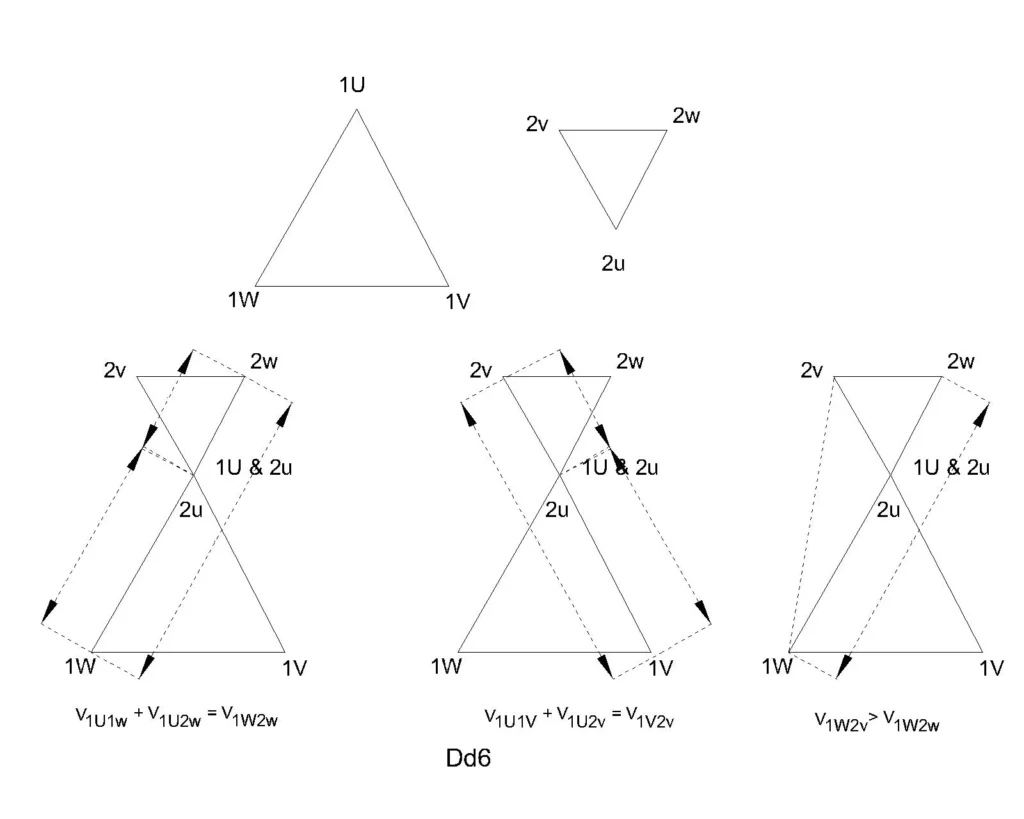
For Dd6 vector group test measure and verify the following equations
V1U1w + V1U2w = V1W2w….[1]
V1U1V + V1U2v = V1V2v….[2]
V1W2v > V1W2w….[3]
YNd1
The HV winding is star or wye connected and the neutral is brought out, the LV winding is delta connected and the LV leads the HV by 330 degrees, denoted by 1.
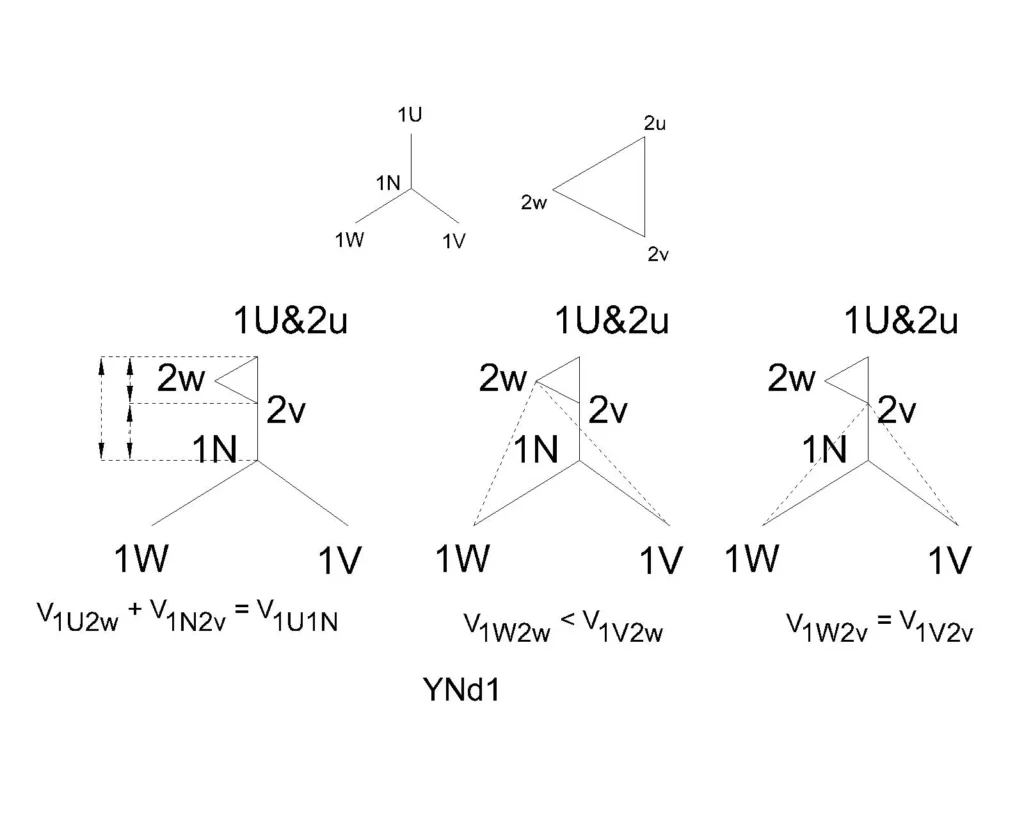
For YNd1 vector group test measure and verify the following equations
V1U2w + V1N2v = V1U1N….[1]
V1W2w < V1V2w….[2]
V1W2v = V1V2v….[3]
YNd11
The HV winding is star or wye connected and the neutral is brought out, the LV winding is delta connected and the LV leads the HV by 30 degrees, denoted by 11.
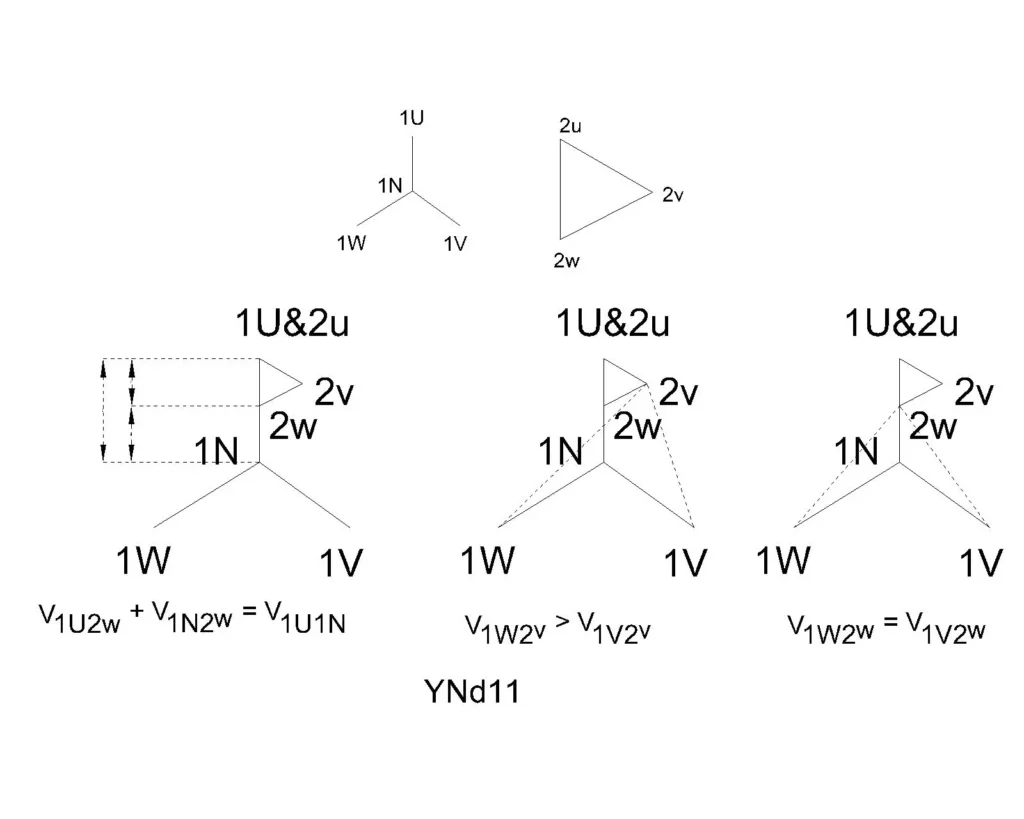
For YNd11 vector group test measure and verify the following equations
V1U2w + V1N2w = V1U1N….[1]
V1W2v > V1V2v….[2]
V1W2w = V1V2w….[3]
Dyn11
The HV winding is delta connected, the LV winding is star or wye connected and the neutral is brought out, and the LV leads the HV by 30 degrees, denoted by 11.
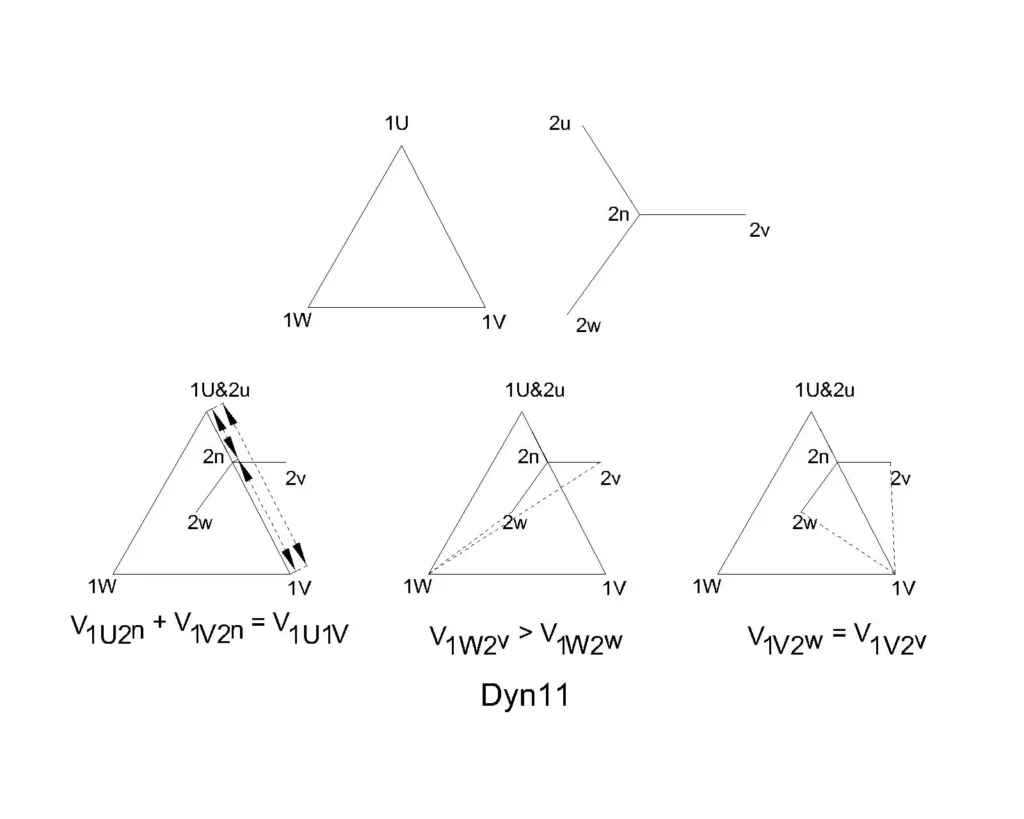
For Dyn11 vector group test measure and verify the following equations
V1U2n + V1V2n = V1U1V….[1]
V1W2v > V1W2w….[2]
V1V2w = V1V2v….[3]
Dyn1
The HV winding is delta connected, the LV winding is star or wye connected and the neutral is brought out, and the LV leads the HV by 330 degrees, denoted by 1.
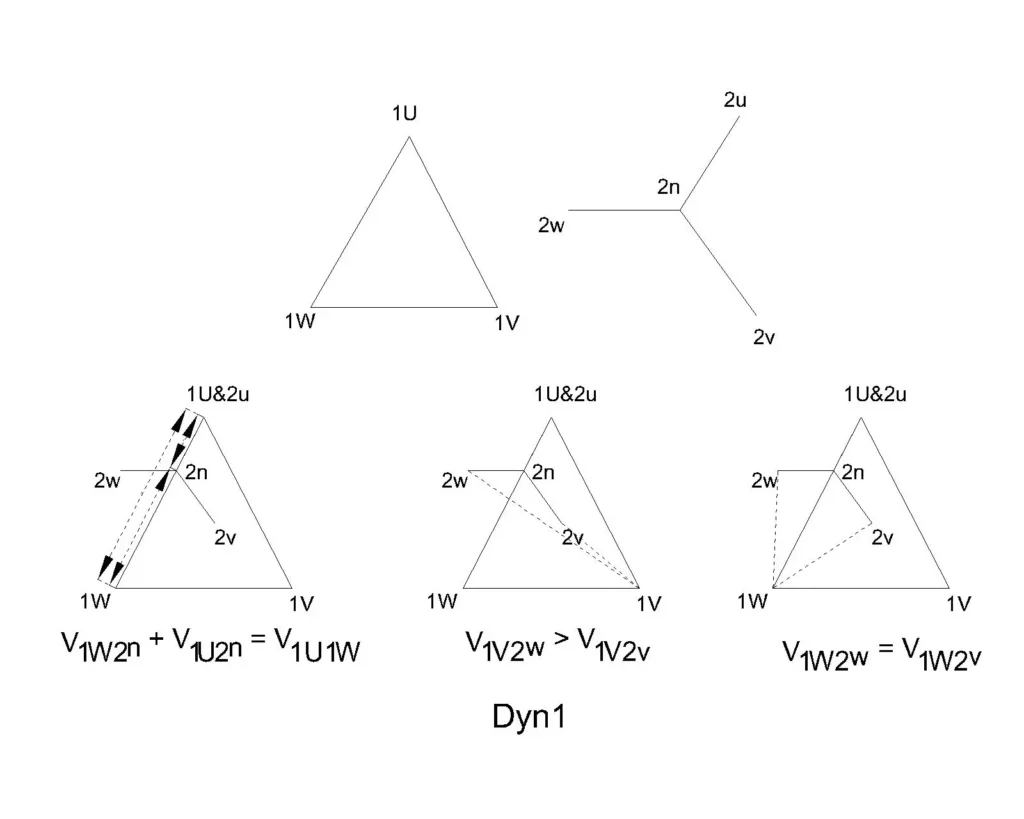
For Dyn1 vector group test measure and verify the following equations
V1W2n + V1U2n = V1U1W….[1]
V1V2w > V1V2v….[2]
V1W2w = V1W2v….[3]
If the three equations are satisfied then the vector group of the transformer is verified else it is not.
This article is a part of the Testing and commissioning page, where other articles related to topic are discussed in details.