Metering analytics is the process of analysing massive amount of data collected and processed by the smart meters and advanced metering infrastructure. Metering analytics uses software, algorithm and machine learning models, which transforms the data from the meters into some actionable intelligence.
The main objective of metering analytics is to get deeper insights of grid operation, consumer behaviour and most importantly the cause and location of energy losses. Metering analytics aids in the power distribution companies to reduce the aggregate technical and commercial loss (AT&C), which is the primary KPI for all modernization projects.
Table of Contents
Types of losses targeted by metering analytics
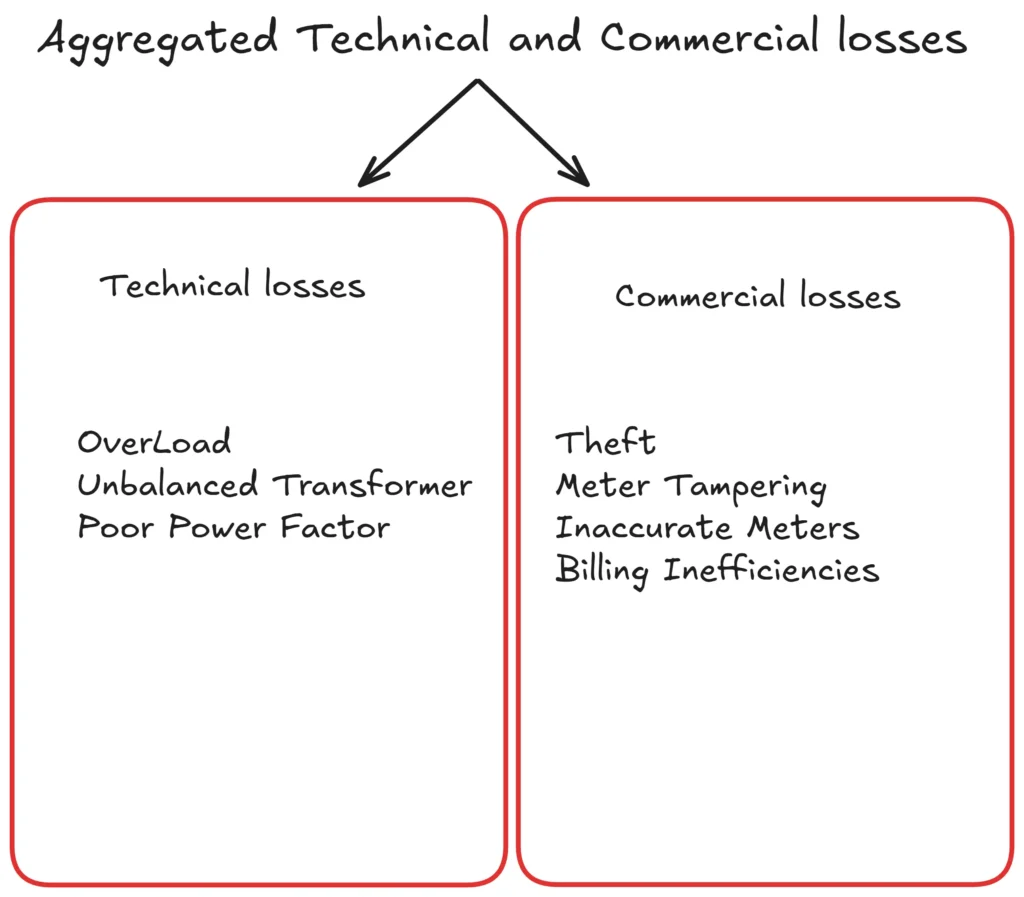
Metering analytics targets the major power system losses which are Technical losses, inherent to the physics of the system and commercial losses which are related to metering, consumer and administrative issue.
Technical losses
These mainly refers to the physics of the distribution network and always gets dissipated as heat (I2R). Although, these losses are impossible to nullify, however can be minimized with proper network planning and maintenance. The technical losses is more prominent in:
Overloaded feeders: When a feeder is overloaded, current I flowing through the conductor exceeds the optimal capacity and I2R losses becomes excessive. By the help of metering analytics, comparing feeder’s source side meter reading to the aggregated downstream load side meter readings can help identify the sections with excessive high power flow.
Unbalanced transformers: Unequal loading of the phases in a distribution transformer leads to circulating current in the winding which causes excessive heating of the transformer windings and losses. By proper metering analytics of the three phase meter of the transformer, phase current differences can be calculated and corrective measures that is load shifting can be performed to minimize the loss.
Poor power factor: When the PF is poor, It essentially means high reactive power presence in the apparent power. This makes the utility line to supply more ampere for same amount of useful work. Since the ampere is more, I2R loss will also increase. By the help of metering analytics, data from the smart meter and the feeder meter is matched to track the active power flow and reactive power flow, thus identifying the consumers with lFow PF (lagging) which requires capacitor bank installation or levying high penalties to them.
Also high reactive power flow through the lines and transformers of the utility contributes to the total current and hence I2R loss. Power quality meter detects the point of highest reactive power contribution and helps the utility to plan for VAR compensation device to improve the voltage profile and reduce the loss.
Commercial Losses
These losses represent the energy that is lost because of improper metering, recording or billing. The commercial losses also contribute to power distribution companies financial stress. This type of losses includes:
Theft: Unauthorized drawl of energy directly from the overhead distribution lines without the use of meter or bypassing the meter. By the metering analytics, comparing the distribution transformer’s energy export to the sum of all energies recorded in the feeder or consumer meter fed by that specific distribution transformer can identify theft in a localized area.
Meter tampering: Physical or electronic manipulation of meters can cause it to slow down, stop recording the consumption like use of external magnets, change of wiring, manipulating the pulse output. These events can be recorded and analysed via metering analytics as modern meters records the specific events like cover opening, magnetic interference and tamper detection forcing the utility for immediate inspection.
Inaccurate meter: Meters can also fail at times to register the energy consumption correctly because of technical defects, aging or used for wrong load, which often leads to under billing. This can be detected by the help of statistical analysis, comparing the consumption history. The meter registering abnormally low energy consumption can be flagged for recalibration or replacement.
Billing inefficiencies: Error in the meter reading application or data entry or software bug which affects the collection of the billed amount leading to revenue loss. Metering analytics like data validation and exception reporting automatically reports the data anomalies between meter reading and the billing system as it flags the missing bills, negative consumption, incorrect tariff codes to high energy consuming customers, thus minimizing the billing inefficiencies.
Techniques of Metering Analytics for loss reduction
There are several techniques available for reduction and detection of technical and commercial losses.
Energy balance of feeders: This is a fundamental technique which is based on conservation of energy. Here, the energy recorded at the meter of the feeder is compared to the aggregated energy billed to all consumers connected downstream to that specific feeder. If any unexplainable difference exists, then it indicates high AT&C losses restricted to the feeder’s area.
With a step-by-step process and getting down to isolating specific geographical area where the difference between the energy input and billed energy is very high, it strongly suggests commercial losses.
If at the distribution transformer level, the secondary output does not match the sum of all energy recorded at the consumer’s meter, then it flags power theft or metering issue.
Load profiling: This is a process of building a normal load profile of a consumer or a group by the historical consumption data and then using the profile to detect any deviation.
Sudden and persistent drop in load (90%) when compared to the load profile can indicate the power theft issue or meter bypassing.
Consumers who are billed for zero energy consumption over repeated billing cycle, particularly if they aren’t vacant can immediately be flagged as meter failure or tempering.
Meter tamper analytics: Digital meters or smart meters are designed for recording the specific events, and metering analytics aggregates and analyses the records to identify the fraudulent activities.
Events like cutting of the neutral wire, magnetic influence or cover open which are time stamped in the smart meter’s events log suggest a fraud attempt.
If the consumer’s consumption drops drastically just after the magnetic interference recorded by the meter, it can be confirmed that it is a successful meter tampering attempt. The system counts the severity and frequency of such activities and assigns a score to each meter. If the combination of low consumption and tamper event is detected, the system moves the meter to priority list, for the field team to visit.
Voltage and PF analytics: This technique uses the power quality data from the meter for reducing the technical losses.
Low voltage is a high technical loss indicator as when the voltage drops at the end of the feeder, the consumer draws high current to maintain the power. This increases the I2R loss drastically. Metering analytics uses the voltage data to identify the long and week feeders which requires reinforcements.
By monitoring the consumer end and feeder end’s power factor continuous and unnecessary reactive power flow can be identified which contributes to I2R losses. By mapping the geographical location with the lowest PF, metering analytics can suggest the utility to install capacitor bank precisely in the region, where the reactive power is consumed most.
This article is a part of the Metering page, where other articles related to the topic are discussed in details.