

A Ground Fault Circuit Interrupter (GFCI) is that circuit breaker which instantly acts to interrupt the power in a circuit, when it detects an imbalance between the incoming and outgoing current, which indicates a ground fault. This type of circuit breaker prevents electrical shock and fires which otherwise would have occurred by the leakage of current through unintended paths.
The Ground Fault Circuit Interrupter is designed specially for the protection of human from dangerous electrocution because of the ground fault in wet or damp location like washroom, kitchen and other outdoor areas. The GFCI breaker monitors the current flow continuously and disconnects the power supply within milliseconds of fault detection. This ensures maximum personal safety and electrical protection.
The GFCI breakers are installed typically in main breaker panel or it can also be installed directly in the wall outlets, where a higher risk of moisture contact is present. The GFCI breakers are capable of protecting individual circuits as well as multiple downstream circuits while maintaining reliability and sufficient safety.
Table of Contents
Construction
The ground fault circuit interrupter is constructed with many key components which are designed to detect electrical leakage and interrupt the power in the circuit. The central part of the GFCI breaker is a current transformer CT and a small toroidal coil, through which both phase and neutral conductors pass. A differential sensing circuit is also placed around the coil which detects the imbalance between the current flowing through the phase and neutral conductors.
When the current through the phase conductor does not match the current returning through the neutral conductor, it implies that current is leaking somewhere in the circuit, possibly through human body or via wet or damp surface. It is this imbalance which creates a small voltage in the CT, which is processed by the electronic amplifier circuit.
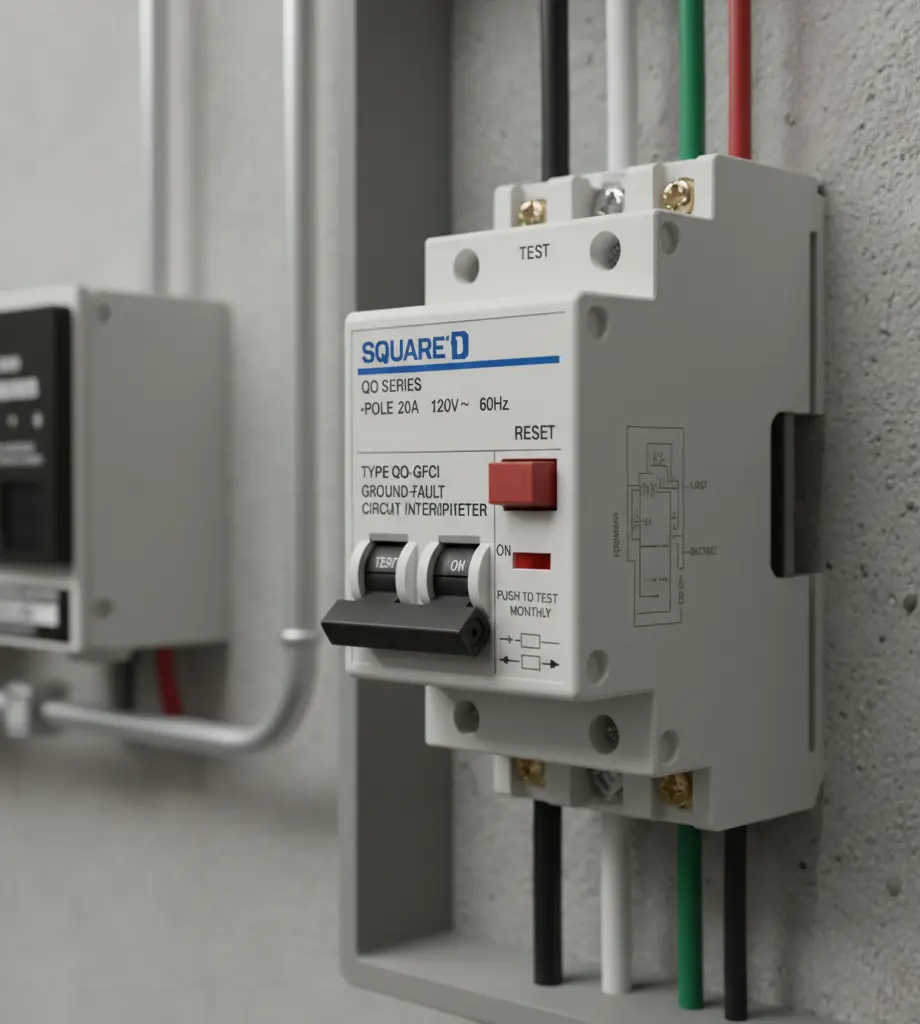
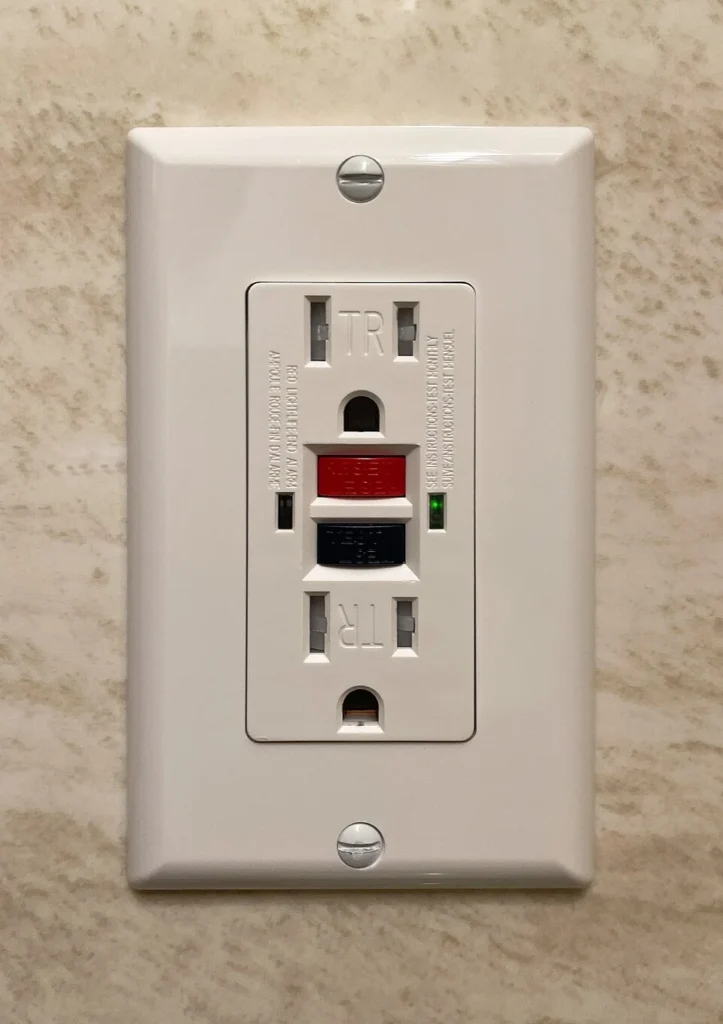
The signal from the amplifier circuit activates a tripping solenoid which opens the contact mechanism, there by disconnecting the power from the circuit. The ground fault circuit interrupter, Ground Fault Circuit Interrupter also includes a test and reset module. The test button simulates a ground fault to test the functioning of the device while the reset button is for restoring the tripping circuit before charging of the circuit.
The entire assembly is enclosed within an insulated casing which prevent any external contact while maintaining reliability also it prevents internal circuitry from harsh environment. The ground fault circuit interrupter exists both as outlet type and breaker type configuration providing flexibility in protection of various systems.
Working principle
The working principle of ground fault circuit interrupter, is based on differences in the flow of current between phase and neutral conductors. In a normal circuit, the current flowing the phase and neutral are equal in magnitude but opposite direction. In case of a ground fault, the current returning via neutral becomes less than the current in the phase conductor.
The ground fault circuit interrupter, continuously monitors the circuit for any imbalance using the current transformer, CT sensor. When the imbalance detected becomes greater than 5 milliamps (mA) approximately, a differential voltage is produced at the CT. The voltage is than processed by the amplification circuit which immediately triggers the solenoid to initiate contact separation of the circuit breaker.
The internal contact separation is a mechanical process resulting in the disconnection of power from the circuit in less than 1/40th of a second. Thus, the fast disconnection reduces the risk of shock and fire.
The neutral pigtail is a pre-attached conductor extending from the Ground Fault Circuit Interrupter’s outlet, which is connected to the neutral bar of the panel to ensures proper return current flow and helping to monitor the circuit balance accurately and ensuring reliable tripping.
The ground fault circuit interrupter, GFCI breakers only focusses on ground fault protection at a very low level of current leakage. The instantaneous disconnection of power when the leakage is detected proves to be life saving protection specially in moisture prone areas like bathroom, kitchen, etc.
Types of GFCI
Outlet GFCI: An outlet GFCI is installed directly on wall mountings which provides localized ground fault protection. The current flow through the outlet and all downstream connection is monitored by it. Commonly used in bathroom, kitchen and garages to prevent from electric shock caused by moisture and the damp space.
Breaker type GFCI: A breaker type GFCI is installed in the main panel or somewhere in the subpanel intended to provide ground fault protection for the entire circuit. It protects all outlets and downstream connections. This type is ideal for large spaces like basement or outdoor circuits combining overload short circuit and ground fault protection in a single unit.
Portable GFCI: A portable GFCI is a plug in type device which is designed for temporary and outdoor application such as protection for connection of power tools, garden equipment, etc. The portable GFCI offers direct protection in the temporary wirings. These are ideal for protection of circuits in damp areas of construction sites ensuring maximum protection to workers from any current leakage.
Applications
According to the National Electrical Code, the Ground Fault Circuit Interrupter are mandatory in those areas where water and electricity likely comes in contact. The GFCI breakers are must in bathroom, kitchen, laundry areas, where the power equipment or outlets are near the sink. The outdoor outlet, the basement and the garage also must have the GFCI breaker protection for prevention of shock caused by dampness or wet surfaces. GFCI breakers are also mandatory near pool, spas, and fountain areas to ensure safety against electrical accidents.
Installation
Installation of the Ground fault circuit interrupter involves the mounting of the breaker in the main breaker panel just like other standard breakers. Turn the main power supply OFF. Then, insert the interrupter in it’s designated slot in the DIN rail. Connect the phase wire from the busbar in the interrupter’s input phase terminal and neutral to the other, while the output terminals are also to be connected by attaching the phase and the neutral wires to the output terminal of the interrupter.
After all the input and output connections made securely, attach the pigtail wire to the neutral busbar. After these connections, restore the power and test the interrupter via test button. After successful test, reset the interrupter and put it in service.
This article is a part of the Switchgear, where other articles related to switchgear are discussed in details.